Anúncios
Real-time voice translation apps are revolutionizing global communication, breaking down language barriers instantly for travelers, professionals, and multilingual families worldwide.
Imagine having a conversation with someone who speaks a completely different language, yet understanding every word they say as naturally as if they were speaking your native tongue. This isn’t science fiction anymore—it’s the reality that voice translation technology brings to millions of users daily.
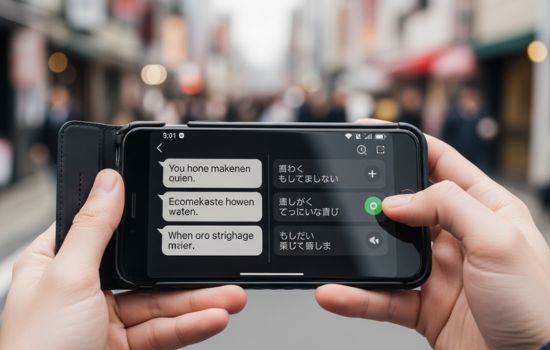
Whether you’re navigating bustling markets in Tokyo, conducting business meetings across continents, or simply trying to connect with someone special who speaks another language, these innovative apps have become indispensable companions in our increasingly connected world. Let’s explore how these technological marvels work and which solutions stand out in 2024.
🌍 How Real-Time Voice Translation Actually Works
The magic behind instant voice translation combines several sophisticated technologies working in perfect harmony. When you speak into your device, the app first converts your speech into text using advanced speech recognition algorithms. This process happens in milliseconds, analyzing your voice patterns, accent, and pronunciation.
Once the speech becomes text, machine learning algorithms translate it into the target language. Modern translation engines use neural networks trained on billions of text samples, understanding context, idioms, and cultural nuances far better than earlier systems.
The final step involves text-to-speech synthesis, where the translated text is converted back into natural-sounding audio. Today’s voice synthesis technology sounds remarkably human, capturing appropriate intonation and emotional context.
What makes this process truly impressive is the speed—all three steps complete in just one to three seconds, creating the illusion of instantaneous translation that feels almost magical when you experience it firsthand.


📱 Top Features to Look for in Translation Apps
Not all translation apps are created equal. The best solutions offer a comprehensive suite of features designed to handle various communication scenarios:
- Offline mode: Essential for international travelers without reliable internet connections
- Conversation mode: Allows two people to speak naturally, with the app automatically detecting which language is being spoken
- Multiple input methods: Voice, text, camera translation for signs and documents
- Dialect recognition: Distinguishes between regional variations like European Portuguese versus Brazilian Portuguese
- Pronunciation guides: Helps you learn correct pronunciation for common phrases
- Phrasebook integration: Quick access to commonly used expressions and emergency phrases
- Cross-platform syncing: Seamlessly moves between your phone, tablet, and smartwatch
Premium apps often include additional capabilities like professional translation services for important documents, cultural etiquette tips, and even augmented reality features that overlay translations directly onto signs and menus through your camera.
💼 Professional Applications Beyond Tourism
While many people associate translation apps with vacation adventures, their professional applications are equally transformative. International businesses use these tools daily for remote meetings, eliminating the need for expensive human interpreters in many situations.
Healthcare professionals rely on translation apps to communicate with patients who speak different languages, ensuring accurate symptom descriptions and treatment instructions. In emergency situations, these apps can literally save lives by facilitating clear communication between first responders and victims.
Educational institutions leverage translation technology to support international students, making lectures and study materials accessible across language barriers. Some schools even use these apps to communicate with parents who speak languages different from the instruction language.
Customer service departments utilize translation apps to expand their global reach without hiring multilingual staff for every language combination. This democratization of communication opens opportunities for businesses of all sizes to operate internationally.
🎯 Accuracy Levels: What to Realistically Expect
Understanding the current limitations of translation technology helps set appropriate expectations. While modern apps are remarkably accurate for straightforward conversations, they still struggle with certain linguistic challenges.
Common everyday conversations—asking for directions, ordering food, discussing weather—typically translate with 90-95% accuracy in major language pairs like English-Spanish or English-Mandarin. The apps excel at literal, practical communication.
However, accuracy drops significantly with technical jargon, poetry, humor, and culturally-specific references. Idioms often translate literally, creating confusing or amusing results. Sarcasm and subtle emotional nuances frequently get lost in translation.
Less common language pairs may experience lower accuracy rates, particularly when translating between languages with vastly different grammatical structures. For instance, translating from Japanese to Arabic involves more complexity than translating between Spanish and Italian.
The good news? Translation accuracy improves continuously as algorithms learn from billions of new translations daily. What seemed impossible five years ago is routine today, and tomorrow’s capabilities will surpass current limitations.
🔒 Privacy Considerations When Using Translation Apps
When you speak into a translation app, you’re sharing potentially sensitive information with technology companies. Understanding privacy implications is crucial, especially for business or personal conversations.
Most translation apps process voice data on remote servers rather than locally on your device. This means your conversations travel across the internet, where they could theoretically be intercepted or recorded. Reputable companies encrypt this data, but the risk isn’t zero.
Some apps explicitly state that they use conversation data to improve their algorithms. While anonymized, this practice may concern users discussing confidential business strategies or personal matters. Always review privacy policies before discussing sensitive topics.
For maximum privacy, look for apps offering on-device translation. These process everything locally without sending data to external servers. The trade-off is typically reduced accuracy and fewer supported languages, but for confidential conversations, this compromise may be worthwhile.
Business users should consider enterprise translation solutions with enhanced privacy guarantees, compliance certifications, and data retention policies suitable for corporate requirements. Consumer apps rarely provide the security assurances that professional contexts demand.
🌐 Language Coverage: Beyond the Popular Choices
The most popular translation apps support 100+ languages, but coverage quality varies dramatically. Major languages like Spanish, French, Mandarin, and Arabic receive continuous refinement and feature the highest accuracy.
Regional languages and dialects present interesting challenges. An app might support “Spanish” but perform differently with Mexican Spanish versus Castilian Spanish. Accent recognition significantly impacts user experience in these situations.
Indigenous and minority languages are increasingly being added to translation platforms, representing important steps toward linguistic preservation and inclusion. However, these languages often have limited training data, resulting in less reliable translations.
Some specialized apps focus exclusively on specific language pairs, offering superior performance for those combinations compared to generalist apps. If you frequently translate between the same two languages, these focused solutions might serve you better.

⚡ Internet Connectivity: Online vs Offline Capabilities
Internet dependency represents one of the biggest practical considerations when choosing a translation app. Online translation leverages powerful cloud servers, delivering superior accuracy and supporting more languages with advanced features.
However, relying on internet connectivity creates problems in common travel scenarios—rural areas, airplanes, countries with restricted internet access, or situations where data roaming costs would be prohibitive.
Offline translation downloads language packs to your device, enabling translation without internet connection. These offline packs consume significant storage space (typically 50-500 MB per language) and offer reduced accuracy compared to online modes.
Smart travelers download offline language packs before departure, ensuring functionality regardless of connectivity issues. Most apps allow you to download just the languages you need, managing storage constraints effectively.
Hybrid approaches work best—use online translation when connectivity permits for maximum accuracy, falling back to offline mode when necessary. This flexibility ensures you’re never completely unable to communicate, regardless of circumstances.
🎤 Voice Recognition Challenges and Solutions
Voice recognition accuracy depends heavily on environmental factors. Background noise in crowded restaurants, train stations, or busy streets significantly degrades performance, causing misrecognitions that lead to incorrect translations.
Speaking clearly and at moderate speed dramatically improves results. Rushing through sentences or mumbling confuses the recognition algorithms, just as it would confuse human listeners. Pausing between thoughts gives the app time to process each segment properly.
Accents present ongoing challenges for voice recognition systems. While apps continuously improve accent handling, strong regional accents or non-native pronunciation may still cause recognition errors. Some apps allow accent selection to optimize recognition for your speech patterns.
External microphones or headsets with noise-canceling capabilities significantly enhance recognition accuracy in challenging environments. The small investment in quality audio equipment pays dividends in translation reliability.
💡 Practical Tips for Maximum Translation Effectiveness
Getting the best results from translation apps requires understanding their strengths and working within their capabilities:
- Simplify your language: Use straightforward sentence structures rather than complex clauses
- Avoid slang and idioms: Stick to standard expressions that translate more reliably
- Confirm understanding: Ask the other person to rephrase or confirm they understood correctly
- Use visual aids: Combine voice translation with gestures, photos, or drawings when possible
- Learn basic phrases: Knowing greetings and courtesies in the target language shows respect
- Test beforehand: Practice with the app before critical situations to understand its behavior
- Keep sentences short: Break complex ideas into multiple simple sentences
- Verify critical information: Have important details like addresses or times written down
Remember that these apps facilitate communication but don’t replace cultural awareness. Understanding basic cultural norms, appropriate formality levels, and conversational etiquette enhances your interactions beyond what technology alone provides.
📊 Comparing Free vs Premium Translation Services
Free translation apps offer impressive capabilities suitable for casual users and occasional travelers. They typically include basic voice translation, text input, and limited offline functionality with advertisements supporting the service.
Premium subscriptions remove advertisements and unlock advanced features like unlimited offline language downloads, professional document translation, priority processing for faster results, and enhanced privacy options.
| Feature | Free Version | Premium Version |
|---|---|---|
| Basic voice translation | ✅ Yes | ✅ Yes |
| Offline languages | 1-3 languages | Unlimited |
| Conversation mode | Limited duration | Unlimited |
| Camera translation | Basic | Advanced AR features |
| Advertisements | Yes | None |
| Monthly cost | Free | $5-15 |
For frequent travelers or professional users, premium subscriptions represent excellent value. The time saved and stress reduced during international trips easily justifies the modest monthly cost. Casual users find free versions perfectly adequate for occasional needs.
🚀 Future Developments in Translation Technology
Translation technology continues evolving at breathtaking pace. Upcoming developments promise even more seamless communication across language barriers, pushing closer to universal translation that works as naturally as same-language conversation.
Emotion recognition represents the next frontier—apps that detect and convey emotional tone, sarcasm, and subtle contextual meanings currently lost in translation. This would dramatically improve the depth and authenticity of cross-language conversations.
Wearable translation devices are becoming more sophisticated, with earbuds that whisper translations directly into your ear during conversations. This creates more natural interaction compared to looking at phone screens or passing devices back and forth.
Contextual awareness improvements will help apps understand conversation history, maintaining coherent dialogue over extended interactions rather than treating each sentence in isolation. This mirrors how human interpreters use conversation context to improve accuracy.
Specialized domain translations—medical, legal, technical—will become more accurate as training focuses on specific vocabularies and contexts. Currently, general-purpose apps struggle with specialized terminology that domain experts use routinely.
🌟 Making Meaningful Connections Across Languages
Beyond the technical capabilities, translation apps enable something profoundly human—genuine connection between people who otherwise couldn’t communicate. They transform potential isolation into opportunity for friendship, understanding, and cooperation.
Travelers share stories of unexpected friendships formed through translation apps, breaking through language barriers to discover shared interests and common humanity. These connections enrich travel experiences far beyond typical tourist interactions.
Multilingual families use these tools to maintain connections across generations when grandparents and grandchildren speak different languages. Technology bridges generational and geographical distances, preserving family bonds despite linguistic differences.
In our interconnected world, the ability to communicate across languages isn’t just convenient—it’s increasingly essential. Translation apps democratize this capability, putting powerful linguistic tools in everyone’s pocket regardless of educational background or language learning abilities.
While learning languages remains valuable for deep cultural understanding, translation technology removes communication as a barrier to basic human interaction. It creates a world where curiosity and openness matter more than linguistic background, where anyone can connect with anyone else regardless of native tongue.
✨ Choosing the Right Translation App for Your Needs
Selecting the ideal translation app depends on your specific requirements, usage patterns, and priorities. Frequent international travelers need robust offline capabilities and extensive language coverage. Business users prioritize accuracy and privacy features above all else.
Consider your typical use cases—will you primarily translate conversations, written text, or visual content like signs and menus? Different apps excel in different scenarios, so alignment between app strengths and your needs matters significantly.
Trial periods and free versions let you test multiple apps before committing to premium subscriptions. Spend time experimenting with different options, testing them in realistic scenarios that mirror your actual anticipated usage.
Read recent user reviews to understand current performance levels, as translation apps improve or occasionally regress with updates. Community feedback reveals practical insights that official marketing materials never mention.
The best translation app is ultimately the one you’ll actually use consistently. An app with slightly lower accuracy that you find intuitive and reliable serves you better than a technically superior option you find frustrating or confusing.
Real-time voice translation represents one of the most practical applications of artificial intelligence in daily life. As these tools continue improving, they bring us closer to a world where language differences enrich rather than divide, where conversations flow naturally across cultures, and where understanding transcends words. Whether you’re embarking on international adventures, building global business relationships, or simply curious about connecting with the wider world, these remarkable apps stand ready to transform barriers into bridges.
